Technology to reduce emissions, particles and microplastics in pavements and urban traffic.
CHM | COMPANY
What is Neeve?
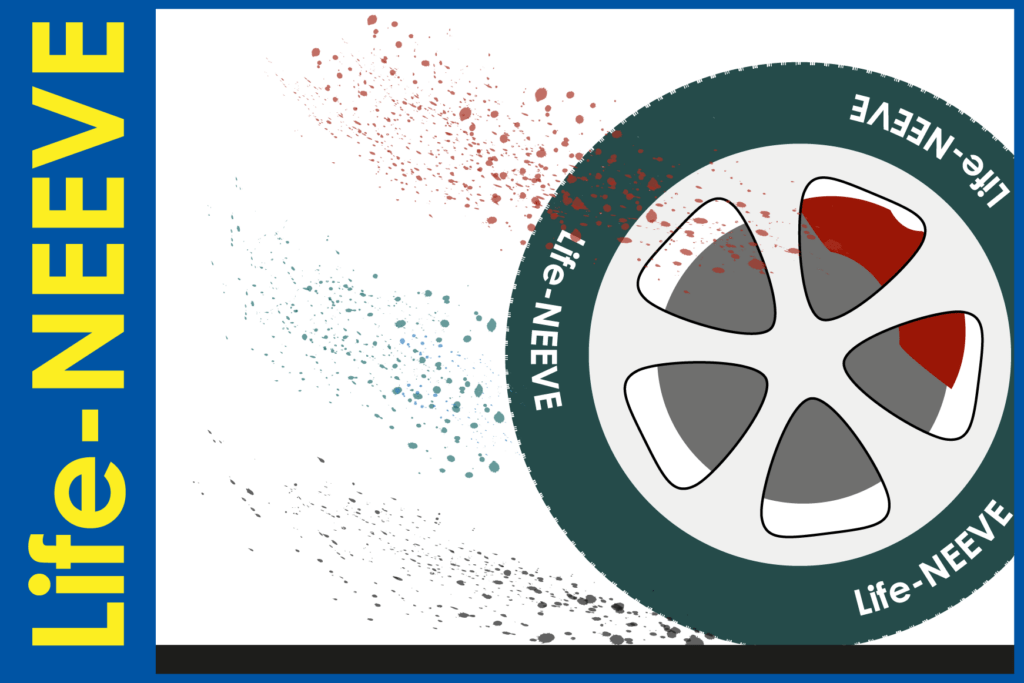
Non-exhaust emissions: particles and microplastics that affect the air we breathe.
According to a recent report by European Environment Agency (EEA) Regarding Health and Environment, in the EU, more than... 400,000 premature deaths due to air pollution. Furthermore, the European Commission has estimated that the annual economic cost of air pollution is at least 330 billion euros. Therefore, the Commission has established the following set of objectives to be achieved by 2030 in the “EU Action Plan: Towards Zero Pollution for Air, Water and Soil”
Transportation is one of the human activities with the greatest impact on air pollution. In 2020, the WHO (World Health Organization) reported that outdoor air pollution is currently dominated by very fine particles with a diameter of 2.5 mm or less, largely emitted by road traffic, causing the death of 4 million people annually worldwide, mainly due to their effects on cardiopulmonary organs.
Reference Document Best Available Techniques (BAT) Reference Documents (BREFs) of the European Environment Agency (EEA) (Eionet Report – ETC/ATNI 2020/5) highlighted that there are very few policy interventions to address the problem of increasing particulate matter (PM) emissions from sources other than vehicle exhaust systems, due to a lack of guidelines and insufficient research. It was established that non-exhaust traffic PM emissions have already surpassed the importance of PM emissions from exhaust systems, first in the case of PM10 and, more recently, also in the case of PM2.5.
Project objectives
The LIFE NEEVÉ project It aims to advance towards cleaner mobility by developing technologies that allow measuring and reducing non-exhaust emissions. (NEE) generated by the contact between vehicles and pavements—such as those produced by tires, brakes, and asphalt.
Through this innovation, we seek to:
Improve air quality and help reduce premature deaths linked to air pollution by 55%.
Protect water resources by reducing plastic waste in the ocean by 50% and the release of microplastics into the environment by 30%.
Reduce by 25% the areas of the EU where air pollution threatens biodiversity.
SCIENTIFIC TECHNOLOGICAL APPLICATION
To achieve the project's objectives, the LIFE NEEVÉ consortium will develop advanced technologies to characterize, measure, and reduce non-exhaust emissions (NEE) generated by vehicle-tire-road interactions.
Real-time onboard measurement systems will be designed to analyze:
Particulate Matter (PM10, PM2.5)
Particle Number and Distribution (PN)
Chemical composition
Morphology by electron microscopy
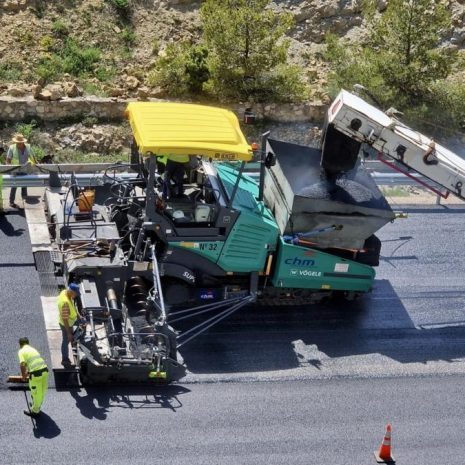
In addition, new less polluting components—such as brake pads, tires, and pavements—will be designed, developed, and validated, and will be tested in real pilot demonstrators, with the aim of significantly reducing the generation of non-exhaust emissions (NEE) and microplastics.
COMPANIES PARTICIPATING IN THE PROJECT
Project funded by
The European Union's LIFE programme under agreement number: Project 101148428 – LIFE23 – ENV – ES – LIFE NEEVE
To get first-hand knowledge of the project's news and progress, Can you visit the official website of the LIFE NEEVE project
We are a business group focused on infrastructure construction and management. We act with technical rigor to promote efficient and safe development.
CONTACT WITH US
Do you have any questions or need assistance? Our team is available to answer you and offer you clear, agile and professional solutions.
WORK WITH US
Join a team where every project adds up. We are looking for people with talent, responsibility and commitment to move forward together in each project.