
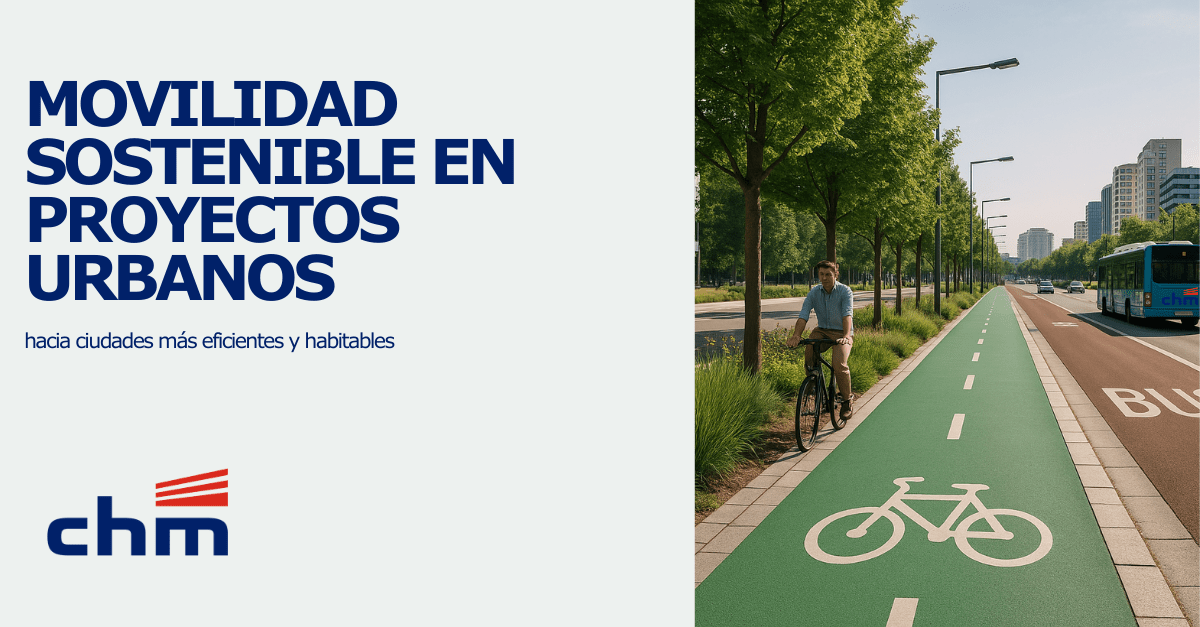
The Sustainable mobility in urban projects it has consolidated itself as one of the great challenges and, at the same time, one of the main opportunities in the design of modern cities. Beyond being a trend, it constitutes a strategic axis for reducing emissions, optimizing resources, and ensuring urban development that improves people's quality of life.
Integrating sustainable mobility into urban planning means investing in efficient, accessible, and inclusive infrastructure that meets current needs without compromising the future of subsequent generations.
What do we mean by sustainable mobility in urban projects?
The sustainable mobility is based on a transportation model that prioritizes energy efficiency, reduces the carbon footprint, and promotes the use of alternative means over private vehicles. In the context of urban projects, it implies designing spaces and solutions that facilitate:
-
Accessible, efficient, and low-emission public transport.
-
Active mobility, such as cycling or walking.
-
Infrastructure adapted for electric vehicles.
-
Intermodality between different transport systems.
-
Urban planning that reduces the need for long commutes.
Key Strategies in Urban Projects
-
Public transport-oriented planning
Invest in efficient public transport networks well-connected to major urban hubs. -
Green corridors and bike paths
Implement itineraries that integrate green zones, encourage bicycle use, and prioritize active mobility. -
Fleet Electrification
Facilitate the implementation of electric vehicles through distributed charging points and sustainable municipal fleets. -
Intelligent traffic management
Incorporate digital technologies, sensors, and data analysis to optimize traffic flow and reduce congestion. -
Inclusive urban design
Ensure mobility solutions are adapted for all people, with universal accessibility and safety as priorities.
Benefits of Sustainable Mobility in Urban Projects
The application of these measures provides benefits on multiple levels:
-
Environmentalreduction of CO₂ emissions and improvement of air quality.
-
Socialmost livable cities, with safe spaces for pedestrians and cyclists.
-
Economicless dependence on fossil fuels and reduction of congestion-related costs.
-
UrbanisticImprovement of the integration between transportation, public spaces, and real estate development.
The role of innovation and digitalization
Sustainable mobility in urban projects is not limited to physical infrastructure. Technologies such as intelligent transportation systems (ITS), big data analytics, shared mobility platforms, and digital planning are already essential tools for improving efficiency and user experience.
Innovation and Citizen Participation in Sustainable Mobility
Sustainable mobility in urban projects cannot be understood solely from a technical or infrastructure perspective; it also requires integrating Social innovation and citizen participation. Increasingly, city councils and public bodies are promoting collaborative processes where residents, businesses, and associations contribute their vision on street design, the implementation of bike lanes, or the reorganization of public transport. This dialogue not only enriches the final outcome but also ensures greater acceptance of the implemented measures.
At the same time, the incorporation of digital technologies —such as traffic sensors, shared mobility platforms, or air quality monitoring apps— allows for data-driven decision-making and anticipation of congestion or pollution problems. The combination of urban planning, technological innovation, and social participation is, therefore, an essential path to achieving more livable, resilient, and resource-efficient cities.
Green infrastructure and active mobility
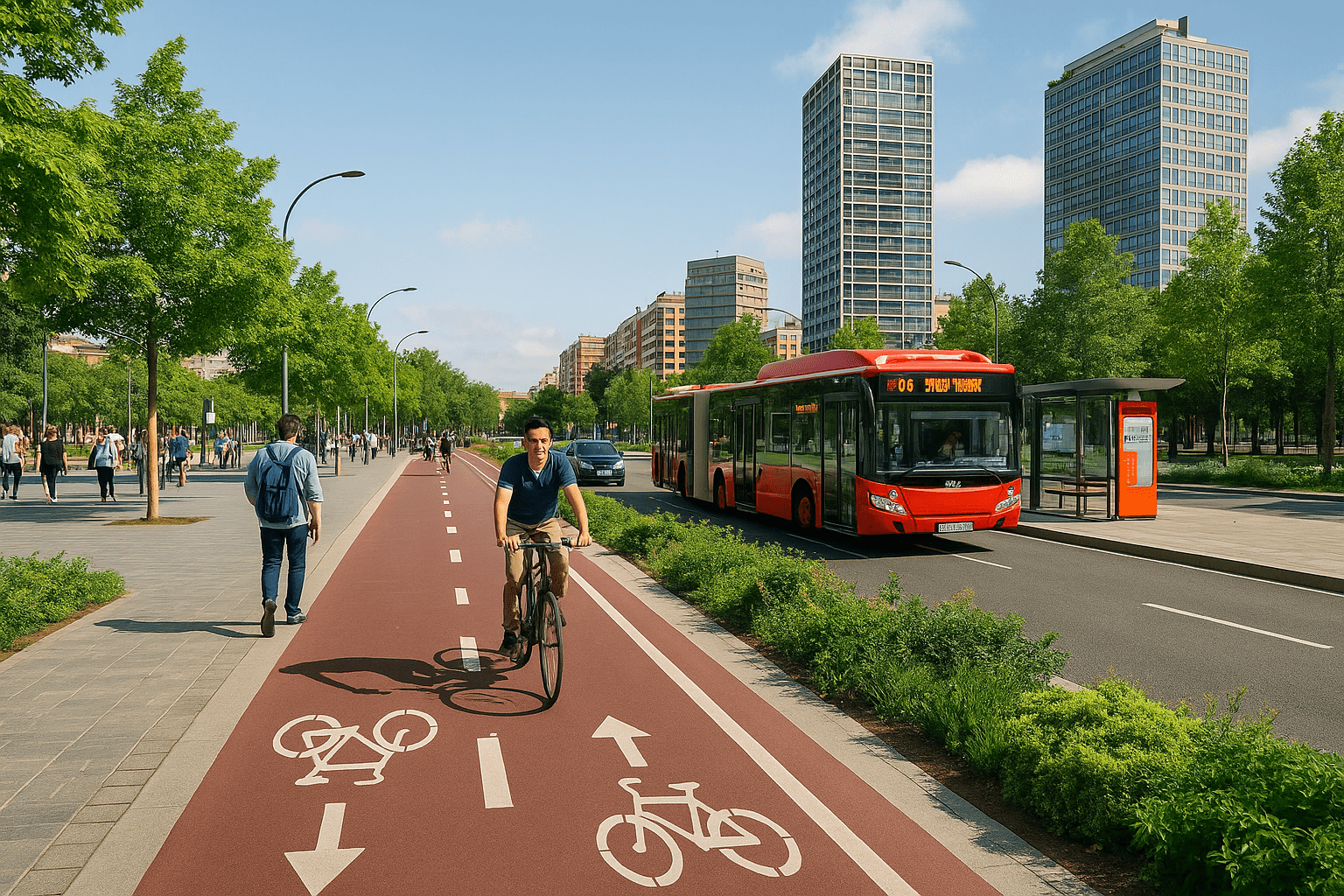
A key aspect of sustainable mobility in urban projects is the integration of green infrastructure that promotes active mobility. Spaces such as green corridors, pedestrian zones, and tree-lined avenues not only facilitate the transit of pedestrians and cyclists but also help mitigate the effects of climate change in cities.
These infrastructures improve air quality, reduce the urban heat island effect, and promote healthy lifestyle habits. The combination of vegetation and active mobility is, therefore, a doubly beneficial strategy: it strengthens the city's environmental resilience and, at the same time, stimulates a cultural shift towards more sustainable and responsible modes of transportation.
Public-private collaboration as a driver of change
The materialization of sustainable mobility projects in urban environments requires close collaboration between public administrations, private companies, and citizens. Public entities provide planning and regulations, while engineering and construction companies apply innovative technical solutions that make projects viable. This cooperation becomes a driver of change, especially when strategic objectives such as reducing emissions, improving transport efficiency, and promoting social inclusion are aligned. Furthermore, access to European and national funding for sustainable mobility projects strengthens cities' capacity to undertake profound transformations in their infrastructure.
The synergy between the different stakeholders ensures that projects are not only designed on paper, but are successfully executed and have a real impact on people's lives.
The Sustainable mobility in urban projects it's not just a matter of redesigning streets or encouraging public transport use: it involves transforming how we understand the city. The integration of green infrastructure and spaces for active mobility add an environmental and social component that strengthens urban resilience to climate change.
At the same time, the collaboration between administrations, businesses, and citizens it solidifies itself as an essential axis for materializing innovative and lasting solutions. Without this cooperation, projects would lack the necessary coherence and scope to generate a real impact on people's lives.
Advancing towards sustainable mobility in urban projects that is more efficient, safe, and responsible therefore requires a comprehensive strategy that combines environmental sustainability, technological innovation, and a shared vision. Only then will it be possible to build cities prepared for the challenges of the present and capable of offering a more livable future for all.
You might also be interested in 3 types of building conservation and maintenancePreventive, Corrective, and Predictive.
Thank you for your time.