
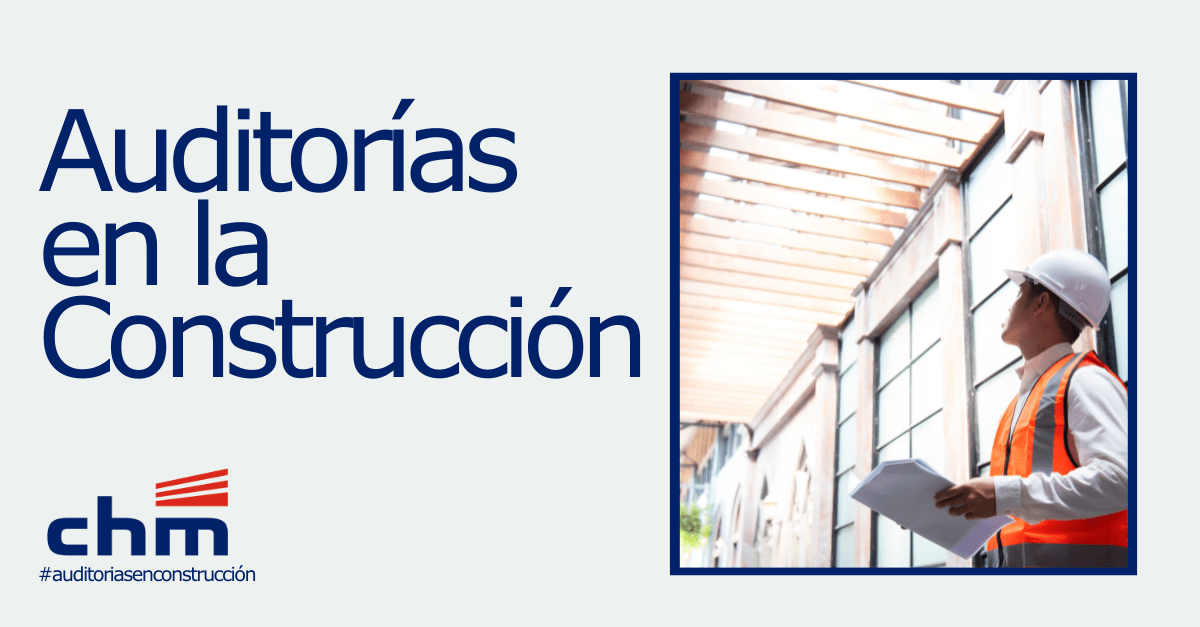
In the demanding world of construction, quality and compliance are not mere aspirations; they are essential. This sector, marked by globalization, intensified competition, shorter product and service life cycles, the maturation of almost all economic sectors, greater legislative rigor, and increasing consumer demands, is forcing companies to take on these 5 management areas and to do so in an integrated way.
In this article, we will explore how audits in construction strengthen our processes and ensure the delivery of the highest quality results.
Audits in construction. Market strategy
Quality as An obligatory strategy to remain in the markets,In order to grow and to be profitable, the national and international legislation that requires this is also becoming increasingly extensive. comply with environmental preservation regulations and to give adequate coverage of workers' occupational risks,In this way, it can be said that all the policies and strategies of the modern company are aimed at producing quality goods or services, that is, at satisfying the needs and expectations of customers, within a production framework that respects the environment and with a work organization that reduces or eliminates unnecessary occupational risks.
It is also increasingly necessary to maintain a innovation and development process and have a system that guarantees the security of the information available to prevent the leakage of databases or processes that could cause serious problems for the company and lead to non-compliance with the existing legislation in this area. Audits in the construction sector allow us to maintain these processes.
5 areas of management
Audits in construction review this organizational framework we are talking about, regardless of the size, nationality or economic sector in which the company carries out its activity, and it can be affirmed that any company that does not incorporate it immediately quality strategies, respect for the environment and occupational health, It will have problems with profits (in the short and medium term) and survival (in the long term).
For all of this, CHM has a Integrated management system based on international standards ISO 9001, ISO 14001, ISO 45001 and ISO 50001 Having recently incorporated Information Security ISO 27001 Our business growth strategy. The implementation of audits in construction is a fundamental pillar of our commitment to excellence. Through meticulous internal reviews and independent external assessments, we ensure that each project not only meets established standards but also reflects our unwavering commitment to safety, respect for the environment, innovation, and customer satisfaction.
ISO standards are essential for construction companies seeking to improve their management and compliance in various areas. By incorporating these standards, CHM demonstrates a significant commitment to quality, the environment, safety, energy, and information security. Below are descriptions of how each of these standards impacts the different management areas within a construction company like CHM:
ISO 9001: Quality Management
The ISO 9001 standard is crucial for construction companies, as it sets the criteria for a quality management system. This standard helps companies become more efficient and improve customer satisfaction. In the case of CHM, implementing ISO 9001 means ensuring that all processes, from the procurement of materials to the final delivery of projects, meet the highest standards of quality. This not only optimizes operations but also minimizes waste and errors, resulting in more successful and profitable projects.
ISO 14001: Environmental Management
ISO 14001 focuses on environmental management, enabling companies like CHM to minimize their negative impact on the environment, comply with applicable regulations, and achieve continuous environmental goals. By adopting this standard, CHM demonstrates its responsibility towards the environment through the effective management of construction waste, the reduction of resource consumption, and the implementation of sustainable practices in its construction projects.
ISO 45001: Safety and Health at Work
ISO 45001 is essential for ensuring safety and health in the workplace. In the construction industry, where risks are significant, this standard helps CHM implement a management system that reduces hazards and improves working conditions. This translates into fewer accidents, higher employee morale, and reduced downtime, which in turn increases productivity and operational efficiency.
ISO 50001: Energy Management
ISO 50001 helps companies improve their energy performance, including efficiency, use, and consumption. By adopting this standard, CHM focuses on optimizing the use of energy in its construction operations, which not only reduces costs but also contributes to combating climate change. Effective implementation of this standard can lead to significant reductions in energy consumption and carbon emissions.
ISO 27001: Information Security
In today’s digital world, information security is critical. ISO 27001 allows companies like CHM to protect their financial, intellectual, and customer data from cyber threats. For a construction company, where documentation and data play a crucial role in every project, implementing ISO 27001 means ensuring that all handled information is maintained with confidentiality, integrity, and availability.
By incorporating these ISO standards, CHM not only improves its internal operations but also strengthens its reputation as a leader in the construction industry, committed to quality, sustainability, safety, energy efficiency, and information security. This positions CHM not only as a formidable competitor but also as a preferred partner in construction projects.
The Importance of Audits in Construction
Maintaining the highest standards of quality is not just an expectation, but an imperative necessity. At CHM, we deeply understand this principle, which is why we have integrated a robust system of both internal and external audits into all our projects. This approach ensures that every stage of construction not only meets quality standards but also follows applicable regulations and the expectations of our clients, scrupulous respect for the natural environment where our projects are developed, control of available natural resources, applying the best available techniques with an innovative approach, and reducing and/or eliminating unnecessary occupational risks.
The Role of the Department of Quality, Environment, Health and Safety and Energy Management in CHM
The CA-MA-PRL and GE departments at CHM play a crucial role in overseeing and ensuring the structural integrity and compliance of our works and services. One of the main functions of this department is to plan and oversee the internal and external integrated audits, which are conducted regularly on our construction projects.
These audits are essential to prevent problems, ensure safety, and ensure that all construction processes are executed correctly while keeping the assessment of legal compliance in mind. Being a fundamental pillar in the company’s continuous improvement cycle.
How Internal and External Audits Work in Construction
The internal audits in construction are carried out by our own team of experts in Quality, Environment, Health and Safety and General Engineering, who continuously evaluate and verify the consistency with processes and quality standards, environmental requirements, energy requirements and requirements for occupational safety prevention.
On the other hand, external audits are carried out by independent entities accredited by ENAC. These provide an objective perspective on our compliance with industry regulations, customer expectations, and all those requirements that we voluntarily subscribe to in our projects. Together, these audits form an integrated strategy that promotes transparency and continuous improvement.
Benefits of Audits in Construction Projects
Implementing a rigorous auditing system has multiple benefits:
- Risk Prevention: It detects potential problems before they turn into critical situations.
- Continued Improvement: It provides essential feedback to improve our construction processes and techniques.
- Customer confidence: It strengthens confidence in our ability to deliver high-quality projects that meet or exceed expectations.
CHM's commitment to Management Systems: CA-MA-PRL and GE.
At CHM, our commitment to construction audits and to Quality Management Systems, Environmental Management, Safety and Health Management and Energy Management is unwavering. Through our audits, we ensure that each project not only meets industry standards, but also sets new benchmarks in quality, environment, engineering and safety and health management. This reflects our dedication to excellence and our responsibility towards our customers and society (stakeholders).
In Summary
In conclusion, it is clear that construction audits are much more than just a regulatory requirement; they are a vital tool that drives operational and strategic excellence at CHM.
Through these detailed assessments, we not only meet legal and ethical expectations, but also raise the industry standard by providing projects that are truly exemplary in both quality and safety, while respecting the environment around us.
The implementation of rigorous internal and external audits in construction allows us to anticipate challenges and adapt proactively, ensuring that each phase of the project is executed flawlessly.
This practice not only strengthens our credibility and reputation among customers and in the market, but also fosters a culture of continuous improvement within our organization.
Our commitment to auditing and quality control underscores our dedication not only to meeting standards but to defining them. We ensure that each project is not only a testament to durability and functionality, but also a reflection of our leadership in innovation and sustainability in the construction sector.
At CHM, we understand that The future of construction depends on integrity, innovation and responsibility Today. That’s why we will continue to lead by example, ensuring that every infrastructure we build not only stands on solid foundations but also contributes significantly to the fabric of our communities. Audits are a crucial part of this commitment, ensuring that each project is a step forward in our mission to build a better future.“